The Dogon people’s rich cultural heritage shines through their iconic attire. This is a key part of West African cultural identity for centuries.
Traditional Dogon costume
This stunning garment shows the Dogon people’s skill and cultural significance. The mix of African tribal attire elements makes the Dogon costume a true treasure of West African heritage.
We explore the significance and beauty of this attire. We look into its history, cultural importance, and the craftsmanship. This showcases the richness of West African attire.
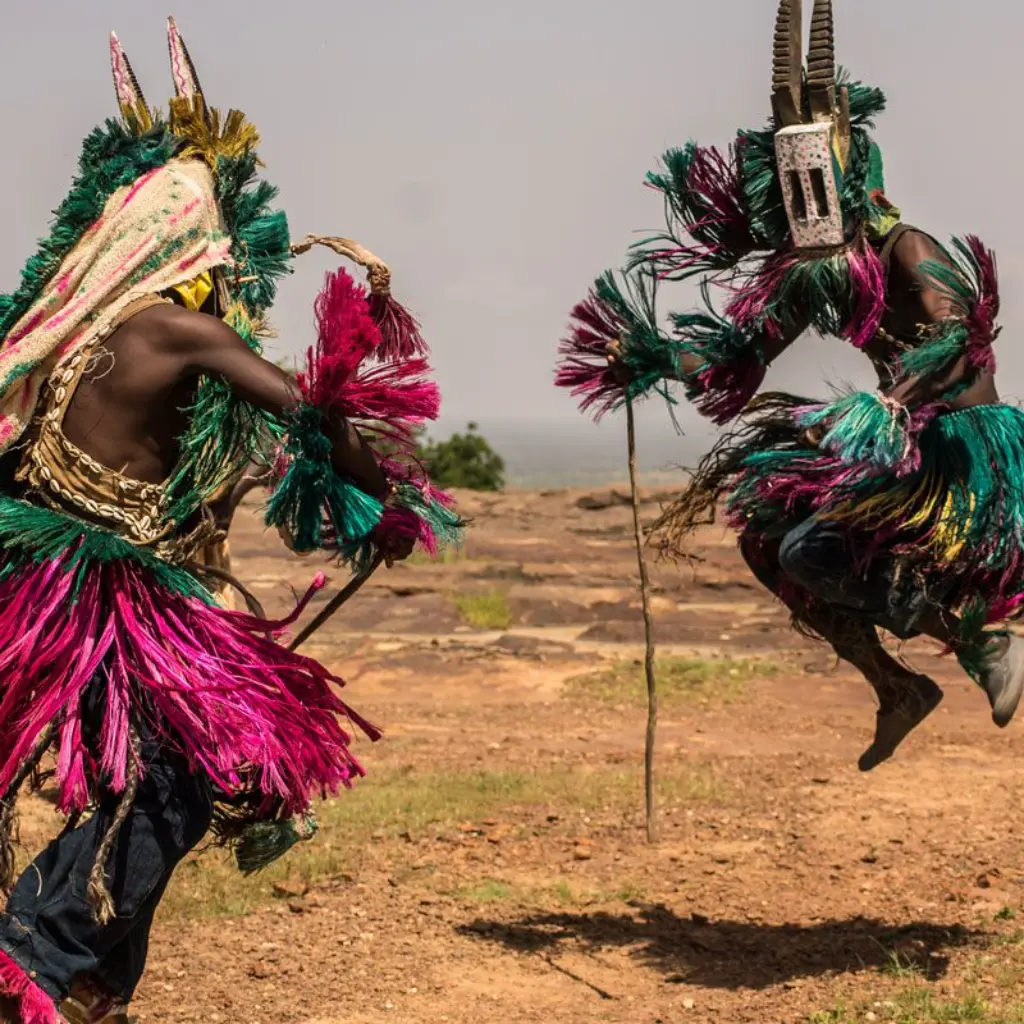
The Rich Heritage of the Dogon People
In West Africa, the Dogon tribe’s clothing is key to their identity. It shows their history, spirituality, and community values. Their traditional dress is a big part of their cultural heritage, telling their unique story.
See also Huli Wigmen Tribal Costume: Papua New Guinea’s Iconic Symbol
Geographic and Historical Context of the Dogon Tribe
The Dogon people live in the Bandiagara Escarpment in Mali. They have a distinct culture shaped by their isolation and history. Their clothes reflect their environment and cultural exchanges with others.
Their attire uses local materials and traditional skills. This makes their clothing special and meaningful.
| Aspect | Description | Significance |
| Geographic Location | Bandiagara Escarpment, Mali | Influenced cultural identity and traditional practices |
| Historical Context | Centuries-old history with various cultural exchanges | Shaped the Dogon people’s cultural heritage and attire |
| Cultural Significance | Traditional clothing reflects spiritual and community values | Embodies the Dogon people’s identity and heritage |
Cultural Significance in West African History
The Dogon people’s traditional dress is deeply meaningful. It connects them to their ancestors and nature. Their clothing is a big part of their rituals and ceremonies, showing their rich heritage.
Their clothes are known for vibrant colors and intricate patterns. These designs tell about their culture and beliefs. The use of specific textiles and adornments highlights their cultural importance.
See also Traditional Attires from New Ireland Province, Papua New Guinea
The Traditional Dogon Costume: Origins and Evolution
The Dogon people’s clothes are more than just outfits; they tell their story and show their culture. Their traditional costume has a long history, going back centuries. The detailed designs and patterns in their clothes show their deep understanding of their attire’s cultural value.
Ancient Roots of Dogon Attire
The Dogon tribe’s traditional clothes come from their ancestral heritage. Their location and history also shaped their attire. They used indigenous textiles and natural fibers, making their clothes unique.
For the ancient Dogon, clothes were a way to express themselves and show who they were. Different clothes meant different things, like status, age, and spiritual beliefs.
Historical Development Through Centuries
Over time, the Dogon costume has changed, influenced by history and cultural exchanges. Moving to the Bandiagara cliffs in Mali changed their clothes, introducing new materials and ways of making them.
Even with outside influences, the Dogon kept their traditional clothes’ core. They adapted to new times while keeping their cultural values.
Materials and Craftsmanship Behind Dogon Garments
The Dogon people have been making clothes for centuries. They use local materials and old techniques. Their clothes are beautiful and carry deep cultural meaning.
Indigenous Textiles and Natural Fibers
The Dogon have always made great textiles from cotton and wool. They pick and process these materials with care. This makes fabrics that last, feel good, and look great.
Using indigenous textiles shows the Dogon’s cleverness and tradition. Their clothes tell their story.
Traditional Dyeing Techniques and Pigments
Dogon artists are masters at dyeing with natural colors. They get these colors from plants and minerals. This makes their clothes colorful and complex.
Using natural dyes makes the clothes look better. It also shows the Dogon’s care for the environment.
Handcrafting Methods and Artisanal Skills
Handcrafting is key to Dogon clothes. Each piece is made with great skill. From spinning to sewing, every step is done with care.
Keeping these handcrafting methods alive is important. It keeps Dogon clothes real and meaningful.
Essential Components of Dogon Traditional Dress
The Dogon tribe’s traditional clothing shows their skill and cultural identity. It’s not just about looks; it holds deep cultural and spiritual meaning. It reflects their history and values.

Male Attire Elements
Dogon men’s traditional clothing has everyday and ceremonial pieces, each unique.
Everyday Clothing for Men
Men wear simple, practical clothes made from natural fibers like cotton. These are often in earthy tones, showing their bond with the land.
Ceremonial Male Garments
Ceremonial clothes for men are more detailed, with complex patterns and symbols. They’re worn during important rituals and celebrations, showing the tribe’s tradition.
Female Costume Pieces
Women’s traditional dress in the Dogon tribe is also rich in cultural meaning. There are clear differences between daily and special occasion wear.
Daily Wear for Women
Women’s everyday clothes are practical yet show the tribe’s textile artistry. They’re colorful and have unique patterns that tell Dogon myths.
Special Occasion Female Attire
For special events, women wear more elaborate, ornate clothes with symbolic accessories. These outfits showcase women’s skill in creating meaningful, beautiful attire that honors their heritage.
The Dogon people’s traditional dress is a vibrant display of their cultural identity. Each piece has a specific role in their society. Understanding these elements gives insight into the rich Dogon culture and its values.
Symbolism and Cultural Meaning in Dogon Clothing
In the Dogon culture, clothes are key to their heritage. They show spiritual, social, and cosmic beliefs. The designs and colors in their traditional clothes mean a lot more than just looks.
Color Significance and Spiritual Representation
Colors in Dogon clothes are very important. Each color has its own spiritual and cultural meaning. For example, red is linked to spiritual events and important life moments.
The use of indigo and other natural dyes also has spiritual value. It shows the Dogon’s bond with the earth and their ancestors.
Pattern Interpretations and Cosmological Meanings
The patterns on Dogon clothes tell stories and myths that are important to their culture. These patterns show their view of the universe and creation myths. They also show how everything is connected.
The detailed designs show the Dogon people’s skill and their deep connection to their heritage.
Social Status Indicators in Dress
Dogon clothes also show social status. Certain clothes and decorations are for the rich or for special events. The authentic Dogon attire worn at these times shows respect for tradition.
The meaning in Dogon clothes is a mix of spiritual, social, and cosmic elements. Their traditional clothes are a unique and interesting part of cultural fashion. They help keep their rich cultural heritage alive.
Ceremonial and Ritual Significance of Dogon Attire
In Dogon culture, clothes are key in rituals and ceremonies. They symbolize spiritual beliefs. The Dogon ceremonial outfit carries messages and connects the wearer to ancestors and the spiritual world.
Costumes for Life Cycle Celebrations
Dogon attire is vital in life cycle celebrations. These mark important life changes. They strengthen social bonds and cultural values for the community.
Birth and Coming-of-Age Ceremonies
At birth and coming-of-age ceremonies, special clothes are worn. They symbolize moving from one life stage to another. These costumes have symbolic patterns and colors that mean a lot in Dogon culture.
Marriage and Funeral Attire
Marriage and funeral attire in Dogon culture are also very important. Specific clothes and adornments are used to highlight these life events. The outfits worn during these ceremonies are full of symbolism, showing the community’s values and beliefs.
Ritual Clothing for Spiritual Practices
The Dogon people use ritual clothing for spiritual practices. They believe certain clothes help communicate with the spiritual world. These garments are made using traditional methods and materials, passed down through generations.

The importance of authentic Dogon attire in spiritual practices is huge. It’s believed to strengthen the wearer’s bond with ancestors and the divine.
The Artistic Expression in Dogon Tribal Fashion
Dogon cultural garb is known for its detailed designs and symbols. It shows the tribe’s creativity and rich culture. Their traditional clothes are a unique blend of art and tradition.
Aesthetic Elements and Design Principles
Dogon tribal fashion is full of unique textile patterns and symbolic color representations. These aren’t just for looks; they hold deep cultural meaning. They are key to the Dogon’s artistic voice.
- Intricate geometric patterns that signify spiritual and cosmological beliefs
- Vibrant colors derived from natural dyes, each with its own symbolic meaning
- Handcrafted accessories that complement the traditional attire
Artistic Innovations Through Generations
The Dogon tribe has a long history of artistic innovation. Their traditional clothing has changed over time but still keeps its cultural heart. Handcrafted Dogon clothing shows the tribe’s skill in keeping traditions alive while exploring new ideas.
- Evolution of traditional dyeing techniques to incorporate new materials
- Innovative patterns and designs that reflect changing cultural narratives
- Continued emphasis on handcrafting methods that preserve traditional skills
The ethnic Dogon dress is more than cultural expression; it’s a living art form. It inspires new generations. Through their fashion, the Dogon people stay connected to their heritage and explore new artistic paths.
Regional Variations of Traditional Dogon Dress
The traditional Dogon costume shows a rich diversity across different regions. This is due to geographical factors and cultural exchanges. It shows the Dogon people’s ability to adapt and express their culture through their clothes.
The Dogon tribe lives mainly in the Bandiagara region of Mali. They have a unique traditional dress that reflects their history and culture. The different styles of their attire come from climate, available materials, and interactions with other tribes.
Geographical Influences on Style and Design
The Dogon people’s location has greatly influenced their traditional dress. The hot savannah and rocky terrain have shaped their clothing choices. They prefer lightweight, breathable fabrics to stay cool.
The rugged terrain also affects the design of Dogon attire. It makes their clothes practical and durable. They use natural fibers and traditional dyeing techniques, showing their connection to their environment.
Cultural Exchanges with Neighboring Tribes
The Dogon people have had many cultural exchanges with neighboring tribes. These exchanges have brought new materials, techniques, and designs to their attire.
For example, they have interacted with the Fulani and Bambara tribes. These interactions have added diverse patterns, colors, and motifs to Dogon clothing. This makes their traditional dress a unique mix of cultural influences.
Preservation Efforts and Modern Challenges
The traditional Dogon costume is at a crossroads, facing modern challenges. Globalization and urbanization are changing the Dogon people’s way of life. Their traditional clothing practices are being tested like never before.
Traditional Knowledge Transmission Methods
The preservation of Dogon clothing traditions relies on passing knowledge from one generation to the next. Traditionally, this knowledge is shared through apprenticeships and community practices. Elder community members teach younger generations the intricacies of handcrafted Dogon clothing. They teach about the significance of patterns, colors, and techniques.
Threats to Authentic Practices in Contemporary Times
Despite their rich cultural heritage, the Dogon people’s traditional clothing practices face many threats. The influence of Western fashion and cheaper, mass-produced clothing are factors in the decline of authentic Dogon garment production. Younger Dogon individuals moving to cities for economic opportunities also disconnects them from their cultural roots.
Organizations Working to Preserve Dogon Textile Arts
Fortunately, organizations are working to preserve the Dogon people’s cultural fashion heritage. These groups support local artisans by providing training, resources, and market access. Some initiatives include:
- Documenting traditional Dogon textile practices
- Promoting handcrafted Dogon clothing through cultural events and exhibitions
- Creating economic incentives for the continuation of traditional practices
Through these efforts, the authentic Dogon garments continue to be celebrated and preserved. This ensures Dogon clothing traditions remain vibrant in cultural fashion worldwide.
Contemporary Relevance and Global Influence
The traditional Dogon costume has gone beyond its cultural roots, shaping modern fashion worldwide. It keeps its traditional charm while becoming a key part of today’s fashion.
Dogon-Inspired Fashion in Modern Contexts
Many fashion designers draw inspiration from the ethnic Dogon dress. They mix traditional Dogon elements with modern styles, creating something new and unique.
This mix of old and new is seen in many fashion shows. Designers use Dogon patterns and colors in their designs, making modern clothes.
International Recognition in Museums and Exhibitions
The Dogon cultural garb is now recognized worldwide. Museums and exhibitions showcase this traditional attire. Cultural fashion shows often feature Dogon clothing, showing its place in African tribal clothing.
These shows not only celebrate the Dogon attire’s cultural value. They also show its impact on global fashion.
| Museum/Exhibition | Location | Year |
| African Cultural Museum | New York | 2019 |
| Tribal Fashion Exhibition | Paris | 2020 |
Cultural Tourism and Economic Impact
The Dogon attire’s cultural importance has boosted cultural tourism. People visit the Dogon region to see its rich culture and buy traditional clothes.
This tourism has positively affected the local economy. It gives locals a way to earn money and encourages them to keep their traditions alive.
Conclusion: The Enduring Legacy of Dogon Cultural Attire
The traditional Dogon costume is a true treasure of African heritage. It shows the rich cultural identity of the Dogon people. This attire is more than just clothes; it’s a symbol of their history and importance.
The Dogon culture, with its unique traditional dogon costume, fascinates people all over the world. African tribal attire, like the Dogon garments, helps keep cultural identity alive. It also helps promote understanding between cultures.
West African attire, including the Dogon costume, has become famous worldwide. Many museums and exhibitions show its beauty and importance. This ensures the Dogon cultural attire continues to inspire future generations.
The traditional Dogon costume connects people with their cultural roots. It also promotes understanding and appreciation of different cultures. As we go forward, it’s crucial to keep and share this cultural treasure.