The Science, Soul, and Survival of Human Craft in the Age of AI
The Forgotten Intelligence
Dr. Maria Gonzalez watches as 73-year-old weaver Carmen Morales works her backstrap loom in a small Oaxacan village. Carmen’s hands move with fluid precision, pulling threads, adjusting tension, creating patterns she’s made thousands of times before. But something extraordinary happens when Carmen’s 12-year-old granddaughter Sofia sits beside her.
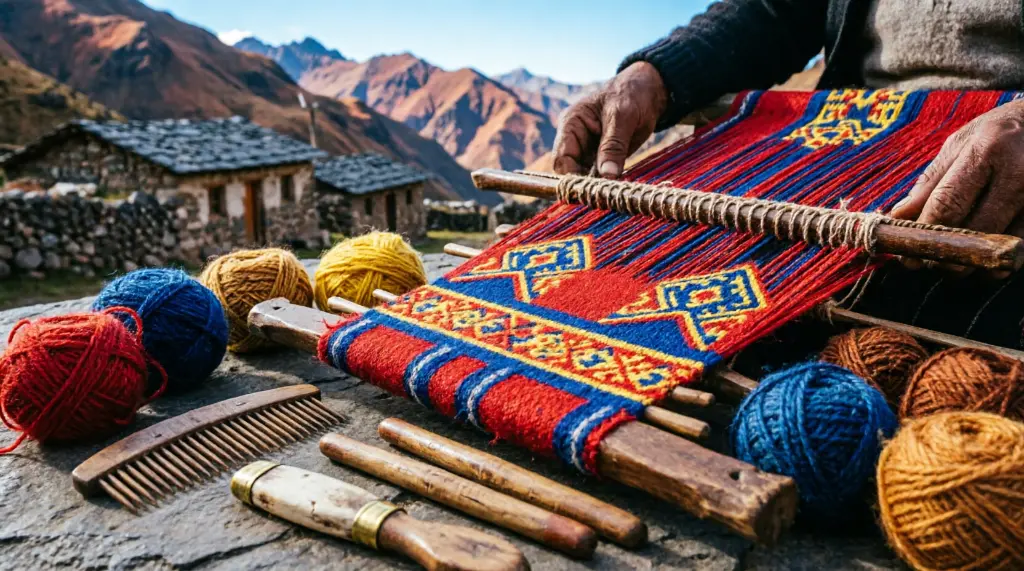
Sofia has never woven before. Her fingers fumble. The threads tangle. But after an hour, something shifts. Her hands begin to “get it” – not intellectually, but physically. The tension becomes intuitive. The rhythm emerges.
“Her hands are remembering,” Carmen says in Spanish, smiling. “They knew this before her mind did.”
See also What is Traditional Clothing? Exploring the Definition and Characteristics
This isn’t poetry. It’s neuroscience.
What Your Hands Know That Your Brain Doesn’t
The Science of Muscle Memory
Research from the University of Southern California’s Brain and Creativity Institute reveals something remarkable: procedural memory – the type stored in our muscles and nervous system – operates differently than cognitive memory. It’s older, deeper, and surprisingly resilient.
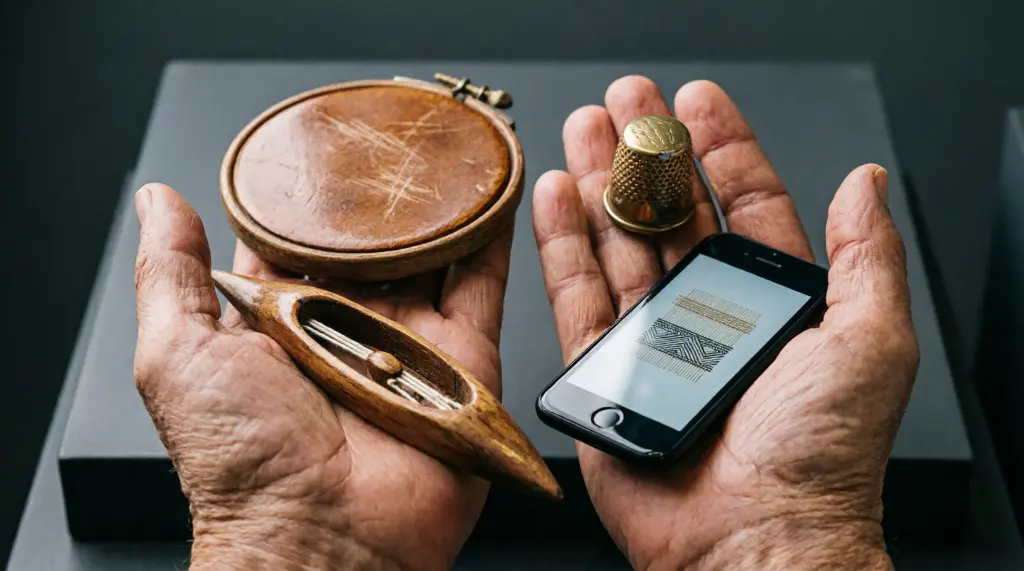
When you learn to knit, weave, or embroider, you’re not just acquiring a skill. You’re activating neural pathways that may have lain dormant for generations. Your hands literally remember patterns your conscious mind has never encountered.
Key findings from 2025 research:
See also History of Traditional Clothing
- Tactile learning activates 3x more brain regions than visual learning alone
- Handcraft practices increase neuroplasticity by up to 40% in adults
- Intergenerational craft transmission shows epigenetic markers – suggesting skills may be “remembered” at cellular level
The Haptic Gap
Here’s what machines will never replicate: haptic intelligence – the ability to “think” through touch.
A sewing machine stitches at exactly 800 stitches per minute, perfectly uniform. But a human hand:
- Adjusts pressure based on fabric resistance
- Feels when a thread is about to break
- Senses the subtle pull of grain direction
- Responds to humidity, temperature, material variation
This isn’t imperfection. It’s conversation. The hand talks to the material, and the material talks back.
The Great Amnesia: How We Forgot
The Generation That Lost Touch
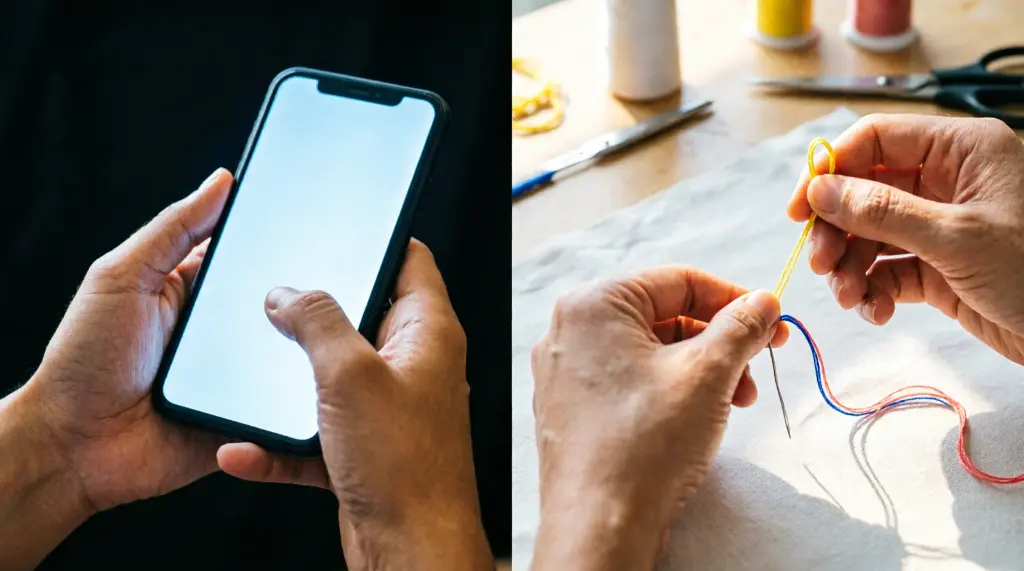
Born in 1998, Emma Chen represents a turning point. She’s part of the first generation to grow up with smartphones as children. By age 16, she’d spent an estimated 10,000 hours swiping and tapping – but couldn’t thread a needle.
“I knew every emoji, but I didn’t know what my hands could actually do,” she reflects now, at 28, as she learns traditional Chinese embroidery in San Francisco.
The statistics are sobering:
- 67% of Gen Z (born 1997-2012) report never learning a traditional handcraft from family
- Average daily screen time: 7+ hours for teens
- Average daily tactile creation time: 6 minutes
We didn’t just lose skills. We lost a language.
The Digital Disconnect
Neuroscientist Dr. James Patterson’s 2025 study reveals the cost: “When we interact primarily through screens, we’re using our hands as pointing devices, not creating instruments. The brain regions responsible for fine motor skills, spatial reasoning, and material intelligence begin to atrophy.”
It’s use it or lose it – and we stopped using them.
The Remembering: Stories from the Frontlines
Story 1: The Algorithm Designer Who Needed Her Grandmother
Sarah Okonkwo, 34, works as a UX designer in London. Her job: make digital experiences “intuitive” and “human-centered.” But in 2024, she hit a wall.
“I was designing ‘touch’ experiences without ever really touching anything real,” she says. “Everything was simulated, predicted, optimized. Nothing was felt.”
So she flew to Nigeria to visit her 81-year-old grandmother, who still practices traditional Yoruba adire cloth dyeing. For two weeks, Sarah didn’t touch her laptop. Instead, she learned to:
- Resist-dye fabric with cassava paste
- Feel when indigo had oxidized enough by the smell
- Tie patterns that told specific stories
“My hands were furious with me,” Sarah laughs. “They’d forgotten how to work without instant feedback. But slowly, they remembered.”
Now, Sarah’s design work has transformed. “I ask different questions: What does this feel like? What’s the texture of this experience? Where’s the human friction that creates meaning?”
Story 2: The Teen Who Found Her Voice in Thread
In rural Poland, 17-year-old Zofia Nowak was struggling. School felt meaningless. Social media made her anxious. The future seemed like a series of algorithms deciding her fate.
Then her great-aunt taught her haft krakowski – traditional Krakow embroidery.
“At first, I thought it was boring. Old lady stuff,” Zofia admits. “But then something clicked. Every stitch was a choice. Every pattern had a story. My great-aunt told me which flowers my great-grandmother embroidered before the war, which patterns meant hope, which meant remembrance.”
Zofia’s Instagram feed transformed from generic selfies to close-ups of embroidered flowers. But more importantly, her mental health improved.
“I couldn’t scroll away from my problems while embroidering, but they also didn’t feel as big. My hands were busy. My mind could breathe.”
Psychologists aren’t surprised. The repetitive motion of handcraft activates the parasympathetic nervous system – the body’s natural calming mechanism.
Story 3: The Refugee Who Carried Home in Her Hands
When Amira Hassan fled Syria in 2015, she could fit her life into one backpack. But she made room for embroidery floss and fabric.
“In the camps, while everything was uncertain, I could still make kantha stitch,” she says. “My hands knew what to do when my mind was lost.”
Now living in Berlin, Amira teaches Palestinian tatreez and Syrian cross-stitch to German teenagers. “They think they’re learning craft,” she says. “But really, we’re learning each other. My hands tell stories my words can’t carry.”
What Machines Forget (That Hands Remember)
1. The Value of Slowness
A machine’s purpose: efficiency. Speed. Output.
A hand’s purpose: relationship.
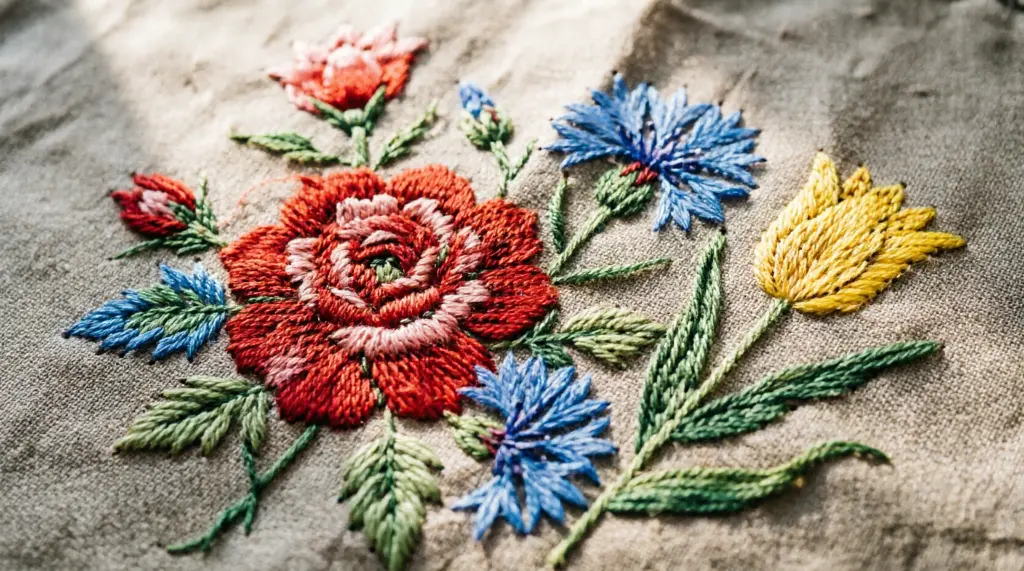
When you embroider for three hours to create two inches of pattern, something shifts in your understanding of value. Time isn’t wasted – it’s invested. The process isn’t a means to an end – it’s part of the meaning.
2. The Wisdom of Mistakes
AI corrects errors instantly. But hands learn from them.
That “mistake” in your embroidery? It becomes a unique design element. The dropped stitch in your knitting? It teaches you tension. The uneven weave? It tells the story of the day you were learning.
Machines optimize. Hands adapt.
3. The Intelligence of Materials
A 3D printer can replicate the appearance of woven cloth. But it can’t:
- Feel when wool is too dry and needs conditioning
- Sense the subtle variation in hand-spun yarn
- Adjust for humidity’s effect on thread tension
- Know when fabric “wants” to be worked a certain way
Materials speak. Hands listen. Machines just execute.
4. The Memory of Community
When you learn to knit from your grandmother, you’re not just learning to loop yarn. You’re learning:
- How she sat
- The stories she told while working
- The way she laughed at her own mistakes
- The values she wove into every piece
Craft is never solitary. It’s always conversation across time.
The Craft Renaissance: By the Numbers
The data tells a story of awakening:
2020-2026 Growth:
- Hand embroidery classes: +340%
- Traditional weaving workshops: +280%
- Craft supply sales (Gen Z): +425%
- Intergenerational craft programs: +510%
But more importantly:
- 78% of new crafters cite mental health benefits
- 64% report stronger family connections through learning ancestral crafts
- 82% say craft practice helps them “feel more human” in digital age
This isn’t a hobby trend. It’s a collective course correction.
How to Start Remembering
Step 1: Identify Your Thread
What craft lives in your family history? Ask:
- What did your grandparents make?
- What skills existed in your culture before industrialization?
- What materials are native to your region?
Don’t know? Start anyway. Every culture has textile traditions. Choose one that calls to you.
Step 2: Embrace Beginner’s Hands
Your first attempts will be awkward. This is essential.
Neuroscience shows that struggle creates stronger neural pathways. The frustration you feel? That’s your brain building new connections.
Permission slip: You’re allowed to be bad at something. You’re allowed to learn slowly. You’re allowed to make things that aren’t Instagram-worthy.
Step 3: Find Your People
Craft was never meant to be solitary. Seek:
- Local workshops and guilds
- Online communities (r/Embroidery, weaving forums)
- Intergenerational programs
- Cultural centers teaching traditional arts
The craft is important. The community is essential.
Step 4: Create Ritual
Don’t just “find time” for craft. Make time sacred.
- Same time each day/week
- Dedicated space, even if small
- Phone away, hands present
- Notice sensations: texture, tension, rhythm
This isn’t productivity. It’s practice.
The Future Is Handmade
In 2026, we stand at a crossroads.
One path leads deeper into automation, AI generation, and frictionless digital existence.
The other leads back to our hands – to the intelligence that built civilizations, preserved cultures, and carried wisdom across millennia.
Here’s the truth: We don’t have to choose one or the other. We can use AI and embroider. We can code and weave. We can design digitally and stitch by hand.
But we must remember: what makes us human isn’t our ability to optimize. It’s our ability to create meaning through our hands.
The Invitation
Your hands are waiting.
They remember more than you know. They carry memories of ancestors you’ve never met, skills you’ve never learned, wisdom you’ve never studied.
All you have to do is begin.
Pick up a needle. Thread it (even if it takes three tries). Make a stitch (even if it’s uneven). Feel the pull of thread through fabric. Notice what your hands know.
And when someone asks why you’re doing this in an age of AI, when machines can create “perfect” work in seconds, you’ll have your answer:
“Because my hands remember what machines forget.”
Resources to Start Your Journey:
Online Learning:
- Craftsy.com – traditional technique courses
- YouTube: “Embroidery with Elizabeth,” “The Weaver’s Loop”
- Skillshare: cultural craft classes
Communities:
- Local fiber arts guilds
- Cultural heritage centers
- Intergenerational craft circles
- #HandsRemember movement on social media
Supplies:
- Start simple: one needle, one thread, one fabric
- Support local artisans when buying materials
- Choose natural fibers when possible – they “speak” more clearly to hands
Your hands are asking for this work.
Your ancestors are waiting to teach you.
The future needs what only your hands can make.
Will you remember with us? 🧵✨