A Mysterious Celebration from the Slavic Past
Among the many traditional festivals of Europe, few are as enchanting as Noc Kupały, often translated as Kupala Night. Celebrated during the summer solstice, this ancient Slavic festival combines fire, water, love, nature, and folklore into one unforgettable night.
Long before Christianity arrived in Central and Eastern Europe, Slavic communities gathered during the shortest night of the year to honor the powers of nature. Bonfires illuminated hillsides, flower wreaths floated down rivers, and young people searched forests for a mythical blossom believed to grant fortune and wisdom.
Today, Noc Kupały remains one of Poland’s most fascinating cultural traditions, connecting modern celebrations with beliefs that stretch back more than a thousand years.
The Origins of Noc Kupały
Noc Kupały emerged from the pre-Christian traditions of the Slavic peoples who inhabited much of Central and Eastern Europe. The celebration was closely linked to the summer solstice, the moment when the sun reaches its highest point in the sky and daylight lasts longer than at any other time of the year.
See also Day of the Dead: A Vibrant Celebration of Life, Love, and Remembrance 🎊💀🌸
For ancient Slavs, this was a sacred period symbolizing:
- Fertility
- Abundance
- Love
- Renewal
- The power of nature
- The union of fire and water
The festival was celebrated across territories that now include Poland, Ukraine, Belarus, Russia, Slovakia, and the Czech Republic. Although local customs varied, the central themes remained remarkably similar.
When Christianity spread through the region, many pagan festivals were adapted rather than completely eliminated. Noc Kupały gradually became associated with St. John’s Eve (Noc Świętojańska), celebrated around June 23–24. Despite this transformation, many of the ancient customs survived and continue to be practiced today.
The Symbolism of Fire
Fire was one of the most important elements of the celebration.
See also Comparing Traditional Festivals in Asian and European Cultures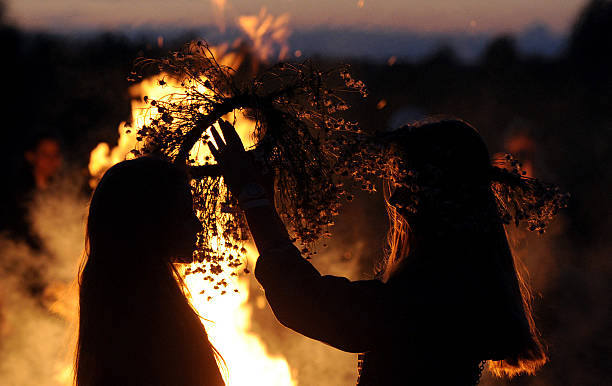
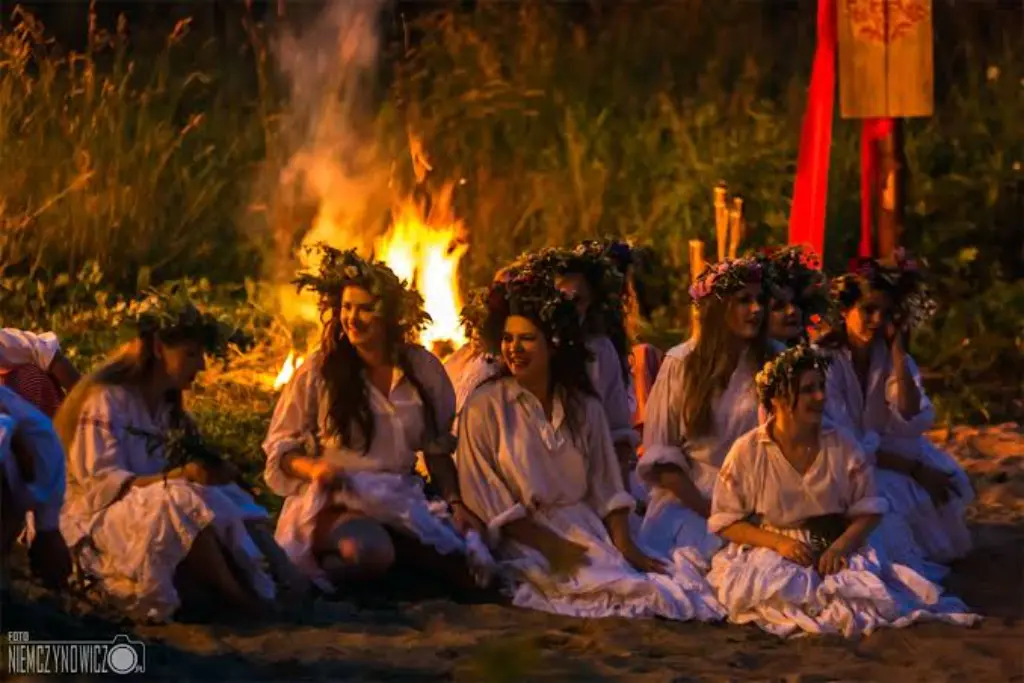
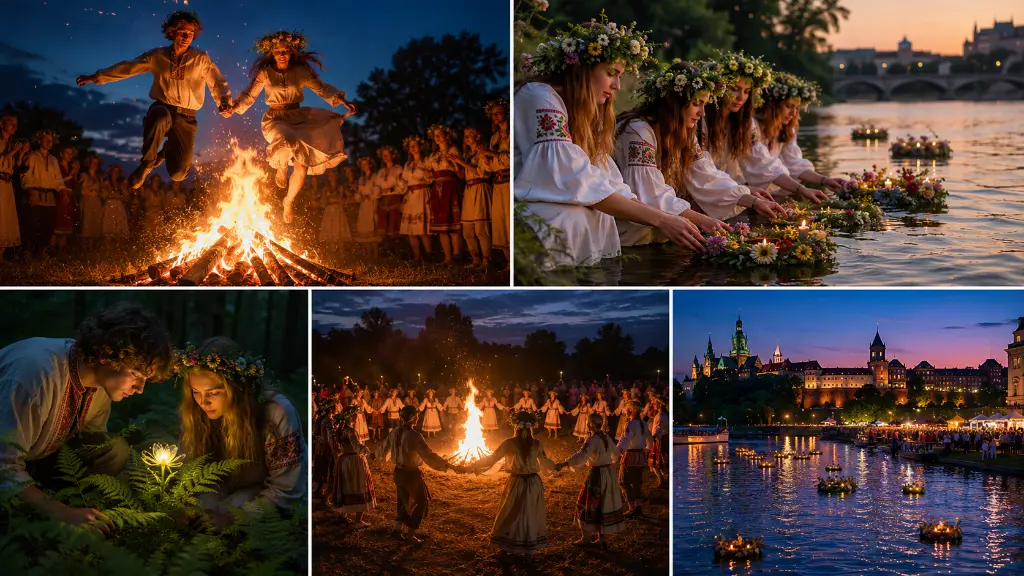
Massive bonfires were lit on hills, riverbanks, and village gathering places. These flames symbolized the power of the sun at its annual peak and were believed to possess cleansing and protective properties.
Participants danced around the fires, sang traditional songs, and performed rituals intended to bring health, prosperity, and good fortune.
One of the most famous customs involved jumping over the flames. According to folklore:
- Jumping over a bonfire purified the soul.
- It protected participants from evil spirits.
- It brought luck for the coming year.
- Couples who successfully jumped together without letting go of each other’s hands were believed to enjoy a strong and lasting relationship.
The image of young people leaping over glowing embers remains one of the most iconic symbols of Noc Kupały.
The Sacred Role of Water
Just as fire represented purification and life, water was believed to possess extraordinary powers during the solstice night.
Ancient Slavs considered rivers, lakes, and streams to be places where the natural and supernatural worlds intersected. Bathing during Noc Kupały was thought to cleanse the body and spirit while providing protection against illness and misfortune.
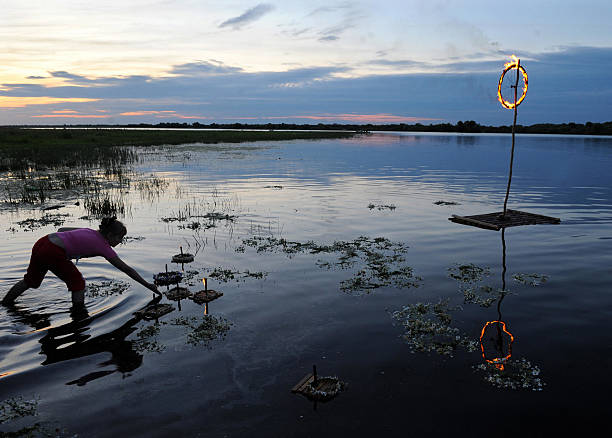
Many rituals took place near rivers because water symbolized:
- Fertility
- Healing
- Transformation
- Female energy
- The mysteries of nature
The combination of fire and water represented balance and harmony between opposing forces, a concept deeply rooted in Slavic cosmology.
Flower Wreaths and Romantic Traditions
Perhaps the most romantic custom associated with Noc Kupały is the tradition of floating flower wreaths.
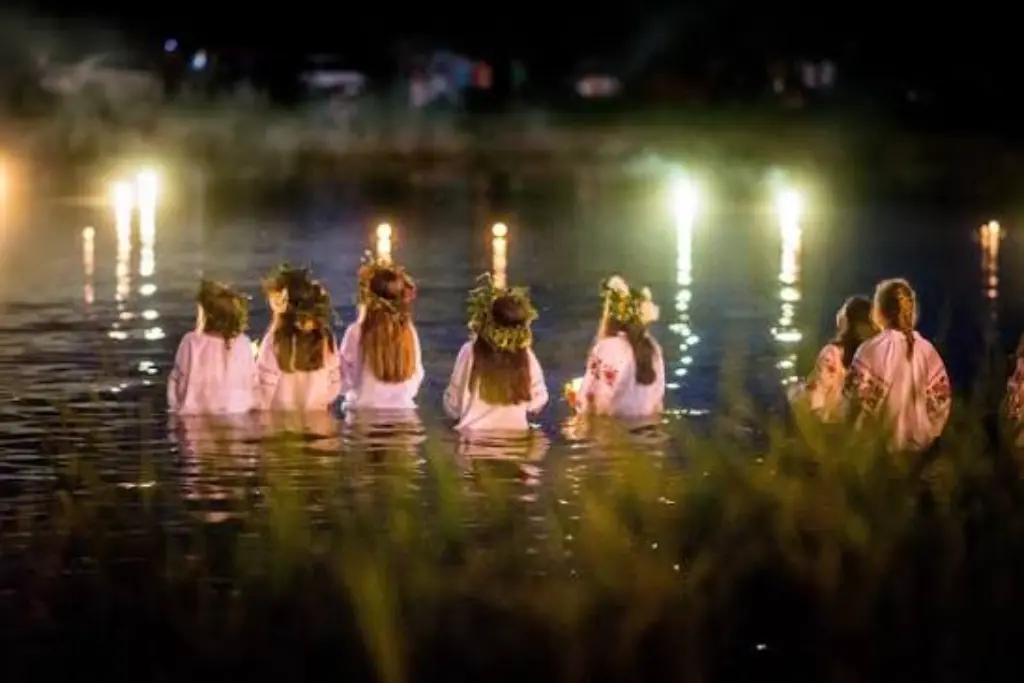
Young women spent hours weaving elaborate crowns from wildflowers, herbs, and greenery. As darkness fell, candles were placed within the wreaths and they were released onto rivers and lakes.
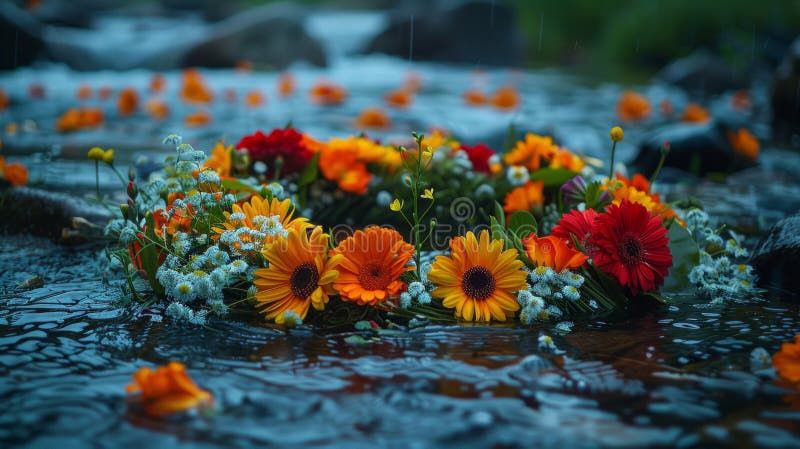
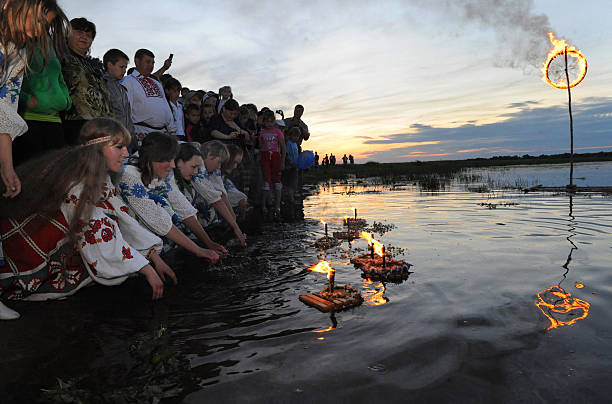
The movement of the wreath was believed to predict the future:
- A smoothly floating wreath suggested happiness and love.
- A wreath caught by a young man indicated a potential romantic connection.
- A sinking wreath was often interpreted as a warning of misfortune.
- A candle that extinguished quickly could symbolize challenges in future relationships.
These customs transformed Noc Kupały into what many historians describe as a kind of Slavic Valentine’s Day, celebrating courtship and the search for true love.
The Search for the Legendary Fern Flower
No story associated with Noc Kupały is more famous than the legend of the Fern Flower (Kwiat Paproci).
According to Slavic folklore, a magical fern blooms for only a brief moment during the solstice night. Whoever discovers this impossible flower gains extraordinary gifts:
- Great wealth
- Wisdom
- Happiness
- The ability to understand nature
- Knowledge of hidden treasures
The legend is especially intriguing because ferns do not actually produce flowers. The quest therefore symbolizes the pursuit of dreams, mystery, and the extraordinary possibilities hidden within the natural world.
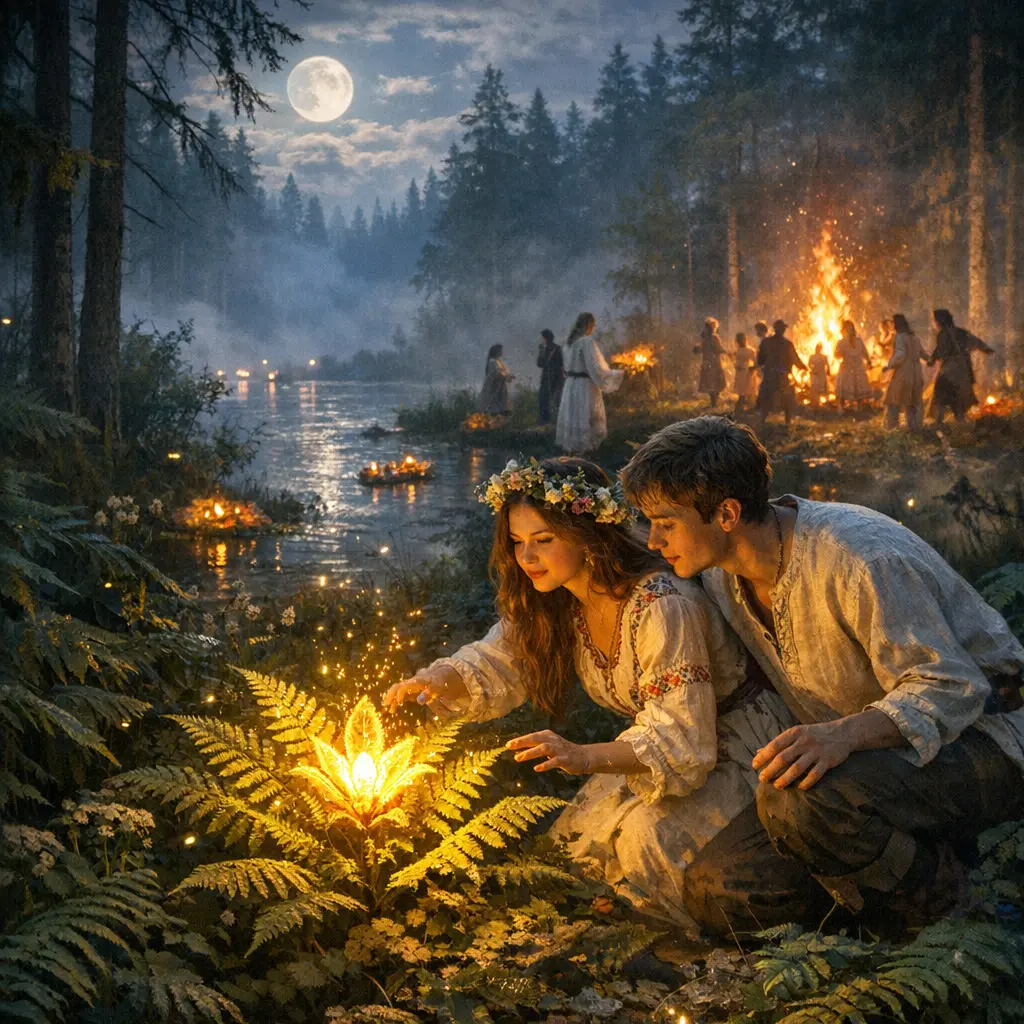
For centuries, young couples ventured into forests under the cover of darkness searching for this mythical blossom.
Music, Dance, and Community Celebrations
Noc Kupały was never a solitary event. It was a community celebration filled with music, dancing, storytelling, and feasting.
Villagers gathered outdoors to welcome the peak of summer and celebrate the abundance of the natural world. Traditional songs echoed through forests and meadows while dancers formed circles around ceremonial fires.
The festival strengthened social bonds and created opportunities for young people to meet potential partners in a setting that encouraged joy, freedom, and connection with nature.
Noc Kupały in Modern Poland
Although Poland is now predominantly Christian, many aspects of Noc Kupały continue to thrive.
Modern celebrations often take place as cultural festivals featuring:
- Traditional folk music
- Historical reenactments
- Bonfire ceremonies
- Wreath-floating rituals
- Craft markets
- Folk dancing
One of the best-known contemporary celebrations is Wianki in Kraków, a large cultural event inspired by ancient midsummer traditions. While today’s festivals emphasize heritage and community rather than religious ritual, they still preserve the magical atmosphere that has characterized the celebration for centuries.
Noc Kupały Beyond Poland
Variations of Kupala Night are celebrated across many Slavic countries.
In Belarus, Ukraine, and parts of Russia, similar midsummer festivals continue to feature bonfires, songs, flower wreaths, and traditional folklore. Despite regional differences, the themes remain remarkably consistent:
- Respect for nature
- Celebration of summer
- Love and fertility
- Purification through fire and water
- The blending of myth and reality
These shared traditions reveal the deep cultural connections that unite the Slavic world.
A Living Link to Europe’s Pagan Heritage
Noc Kupały offers a rare glimpse into a world that existed before churches, kingdoms, and written chronicles transformed Europe. It preserves echoes of ancient beliefs that viewed rivers, forests, sunlight, and fire as sacred forces deserving respect and celebration.
More than a thousand years after its origins, the festival continues to captivate people with its mixture of romance, mystery, folklore, and natural beauty.
As bonfires burn beside rivers and flower wreaths drift beneath the stars, Noc Kupały reminds us that some traditions possess a timeless power capable of connecting generations across centuries. It remains one of Poland’s most magical cultural treasures and a vivid example of how ancient customs can continue to inspire the modern world.