Egyptian Cultural Dress by Region: Nile Delta, Upper Egypt and Bedouin Styles
When we think of “Egyptian dress,” our minds often drift to the ancient past: the white linen kilts of pharaohs and the elegant sheath dresses of queens frozen on temple walls. But Egypt is not a museum. It is a living, breathing, and incredibly diverse nation, and nowhere is this more visible than in the vibrant tapestry of its traditional regional clothing. The sleek, modern styles of Cairo tell only one part of the story. The true soul of Egyptian dress lies in the countryside, in the villages and oases where heritage is worn as a badge of identity.
To truly understand Egypt, you must travel its length through its garments. You must feel the practical, earthy cotton of the Nile Delta fellahin, see the proud, dark hues of the Upper Egyptian Sa’idi, and witness the dazzling, intricate embroidery of the Sinai Bedouin. Each style is a unique language, telling a story of the land, the lifestyle, and the deep-rooted identity of its people.
This article is your guide on that journey. We will explore the distinct clothing traditions of Egypt’s three great cultural regions, decoding the symbols, understanding the materials, and celebrating a rich, living heritage that is too often overlooked.
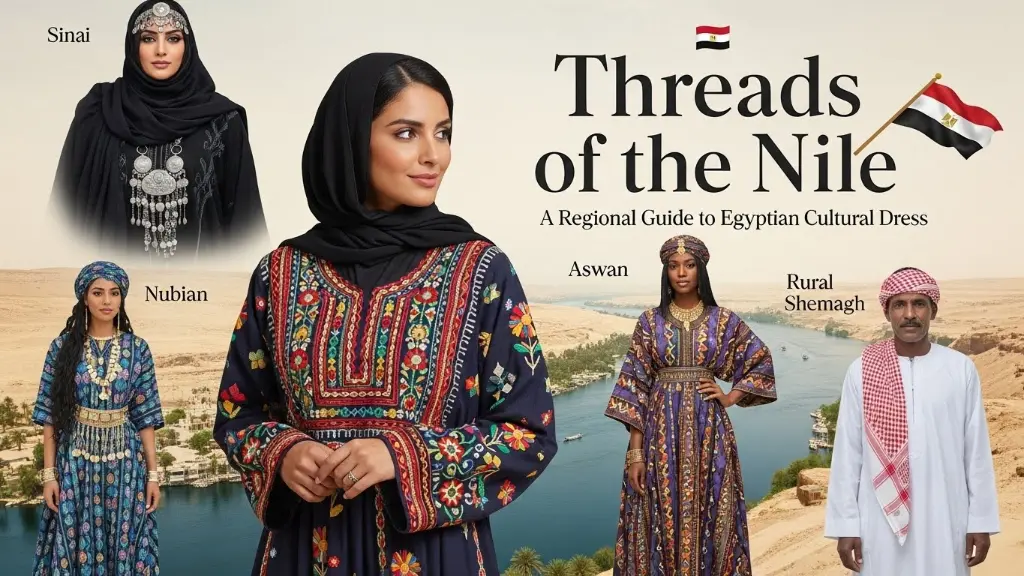
🌱 The Nile Delta: The Practical World of the Fellahin
The Nile Delta is the green, fertile heart of Egypt. It is a land of lush fields, winding canals, and ancient farming villages. The people of this land are the Fellahin (singular: fellah), the farmers who have cultivated this soil for millennia. Their clothing is a direct reflection of their world: practical, durable, and deeply connected to the earth.
See also Traditional Clothing of Egypt: A Timeless Blend of Heritage and Culture
The Galabeya: The Quintessential Egyptian Garment
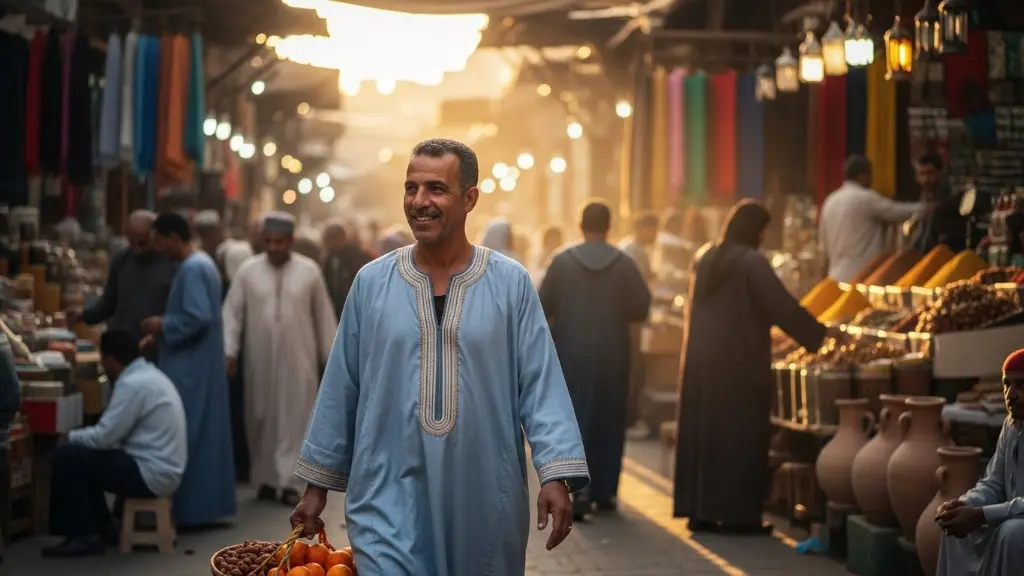
The cornerstone of rural Egyptian dress for both men and women is the Galabeya (gallabīyah). This is a long, loose-fitting robe with long sleeves, designed for both comfort and modesty. Its brilliance lies in its simplicity and functionality.
- Climate Control: The loose fit allows air to circulate freely around the body, creating a natural cooling system in the intense Egyptian heat. In the cooler evenings, the layers of cloth provide warmth.
- A Garment for Work: For the fellah working in the fields, the galabeya is the perfect garment. It protects the skin from the sun, and its length can be hitched up at the waist for freedom of movement when wading through canals or tending to crops.
The Fellahin Man’s Attire
The fellah‘s clothing is characterized by its earthiness and practicality.
- The Classic Galabeya: His galabeya is typically made of sturdy Egyptian cotton, often in simple, light colors like off-white, light blue, or grey to reflect the sun. It has a simple round collar and wide sleeves.
- The Skullcap (Taqiyah): A simple white cotton skullcap is a common head covering, often worn on its own or as an under-layer for a larger turban.
- The Turban (Imama): For sun protection or more formal occasions, a length of cloth is wrapped around the taqiyah to form a small, practical turban.
This is the timeless uniform of the Egyptian farmer, a look that has changed remarkably little over the centuries.
The Fellahin Woman’s Colorful World 💐
While the men’s clothing is often subdued, the women of the Delta wear a more colorful and decorative version of the galabeya, often called a tob sebleh.
See also 👑🐍🏺 Ancient Egyptian Fashion: A Journey Through Its Evolution and Historical Legacy
- Vibrant Colors and Prints: Their galabeyas are often made of brightly colored, printed cotton or synthetic fabrics, featuring bold floral or geometric patterns. Black is also a very common base color for more formal or older women’s dresses, but it is always brought to life with decoration.
- Embroidery and Appliqué: The neckline, sleeves, and hem are often decorated with simple but colorful embroidery or appliqué work, adding a touch of personal flair and beauty.
- The Headscarf (Tarha): The woman’s head covering is essential. It is usually a long, wide rectangle of cloth called a tarha. For everyday wear, it might be a simple printed cotton scarf, but for special occasions, it becomes a canvas for decoration. The most iconic is the black, net-like tarha decorated with shimmering sequins or small metal discs that catch the light and create a soft, tinkling sound.
The dress of the fellaha is a beautiful expression of femininity and joy amidst the hard work of rural life.
🦅 Upper Egypt: The Proud and Noble Dress of the Sa’idi
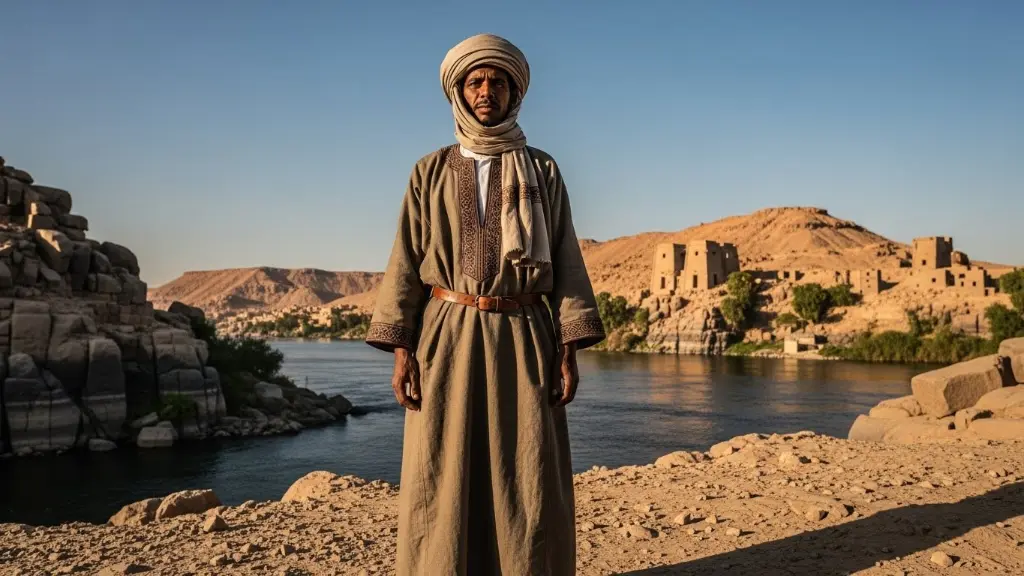
Travel south from Cairo, and you enter Upper Egypt, a region known as the Sa’id. This is a land with a distinct and powerful cultural identity. The Sa’idi people are known for their pride, their strong family ties, and their deep-rooted sense of honor. Their clothing reflects this character: it is more formal, often darker in color, and carries an air of sober dignity.
The Sa’idi Man’s Distinguished Look
The Sa’idi man’s galabeya is noticeably different from its Delta counterpart. It is a statement of status and regional identity.
- The Wide-Sleeved Galabeya: The most distinctive feature is the incredibly wide, flowing sleeves. These voluminous sleeves are a sign of prestige and are used to great effect in Sa’idi culture, often held or gestured with to emphasize a point during conversation.
- Darker Hues: While light colors are worn, Sa’idi men often favor darker, more sober colors like navy blue, brown, grey, and black, which lend an air of seriousness and authority. The fabric is often a heavier, higher-quality cotton or wool blend.
- The Turban (Imama): The turban is more prominent and formal here than in the Delta. It is a carefully wrapped length of cloth, often white, that signifies wisdom and respectability.
- The Overcoat (Kaftan): For formal occasions or in winter, a man might wear a heavier, open-fronted coat called a kaftan over his galabeya, further adding to the stately silhouette.
The Sa’idi Woman’s Elegant Modesty
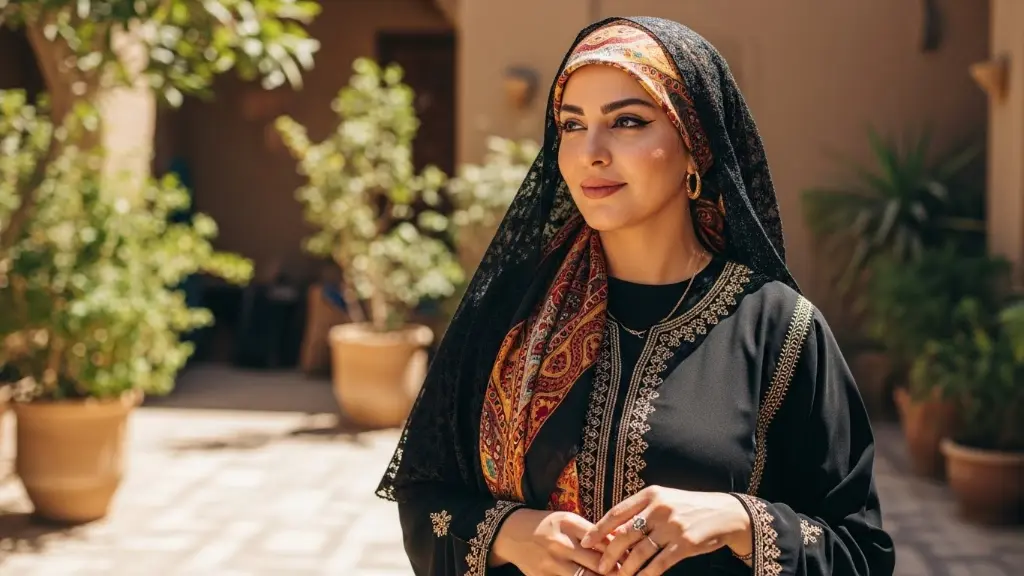
The dress of the Sa’idi woman is characterized by its elegance, modesty, and the use of a single, dramatic outer garment.
- The Tob or Tawb: The quintessential garment is a very wide, black outer dress, often made of soft, flowing cotton or rayon. It is worn over a more colorful inner dress. The sheer volume of the black tob creates a dramatic, graceful silhouette and provides a powerful statement of modesty.
- Intricate Embroidery: While the outer garment is black, it is often a canvas for stunningly intricate embroidery, especially on the chest panel, sleeves, and hem. The embroidery might be in subtle black thread, creating a beautiful textural effect, or feature fine cross-stitch (falahee) in vibrant colors, hinting at the richness within.
- The Head Covering: The head covering is also typically a large, black scarf (ghutra or shash), which is wrapped in a way that covers the hair completely and drapes elegantly over the shoulders.
- Gold Jewelry ✨: The dark fabric provides the perfect backdrop for gold. Sa’idi women are known for their love of heavy, traditional gold jewelry—large necklaces (kardaan), bracelets, and earrings—which represent the family’s wealth and the woman’s personal savings.
The dress of the Sa’id is a powerful expression of a culture that values honor, family, and a deep respect for tradition.
🏜️ The Sinai and Eastern Deserts: The Dazzling World of the Bedouin
Venture into the vast, stark landscapes of the Sinai Peninsula and the Eastern Desert, and you enter the world of the Bedouin. These nomadic and semi-nomadic tribes have a culture forged by the harsh beauty of the desert. Their clothing is a breathtaking explosion of color and embroidery, a vibrant assertion of life and identity against the muted tones of the sand and rock.
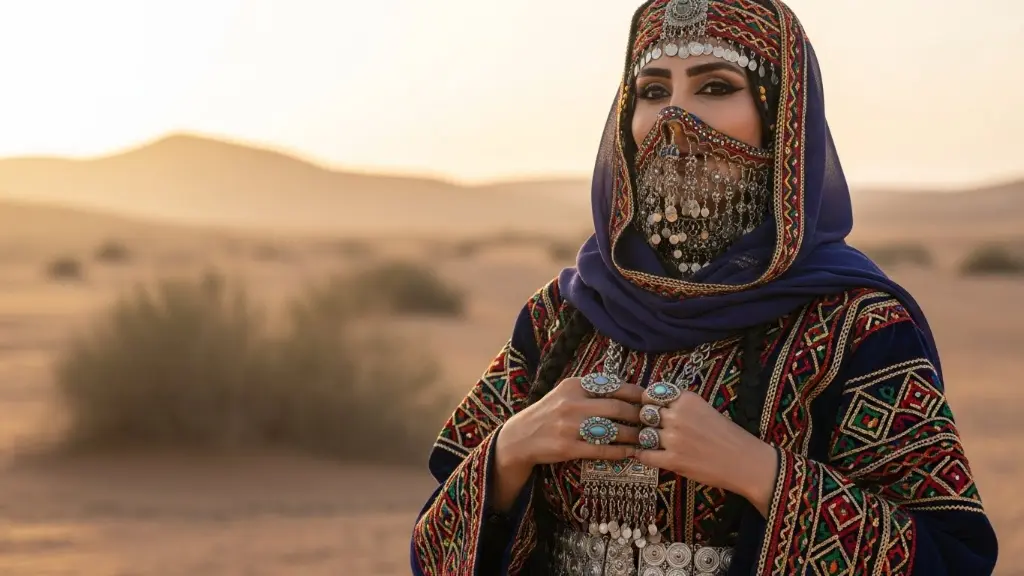
The Bedouin Woman’s Embroidered Masterpiece 🎨
The Bedouin woman’s dress is one of the most visually spectacular forms of traditional attire in the world. It is a work of art, a storybook, and an identity card all in one.
- The Black Dress as a Canvas: Like the Sa’idi woman, the base is often a simple black or dark blue dress. But here, it serves as a dramatic canvas for an explosion of intricate, colorful embroidery.
- A Language of Stitches: The embroidery (tatreez) is the heart of the dress. It is a dense, geometric cross-stitch that covers the entire chest panel (qabbeh), the lower back, and the side seams of the dress. The specific patterns, motifs, and color combinations are a unique language that can identify a woman’s tribe and her marital status. A dress from the northern Sinai will have different motifs than one from the southern Sinai.
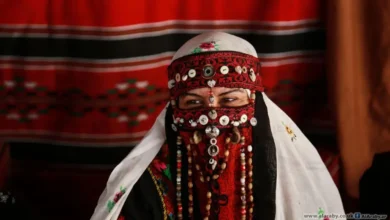
- The Face Veil (Burqa): The Bedouin burqa is one of the most distinctive and often misunderstood elements. It is not the Afghan-style burqa. The traditional Sinai burqa is a face veil that covers the lower part of the face, leaving the eyes visible. It is often long, rectangular, and heavily decorated with coins, chains, and beads. The style and decoration of the burqa are also unique to each tribe. For a Bedouin woman, it is a marker of her identity and her transition into womanhood.
The Bedouin Man’s Desert Attire
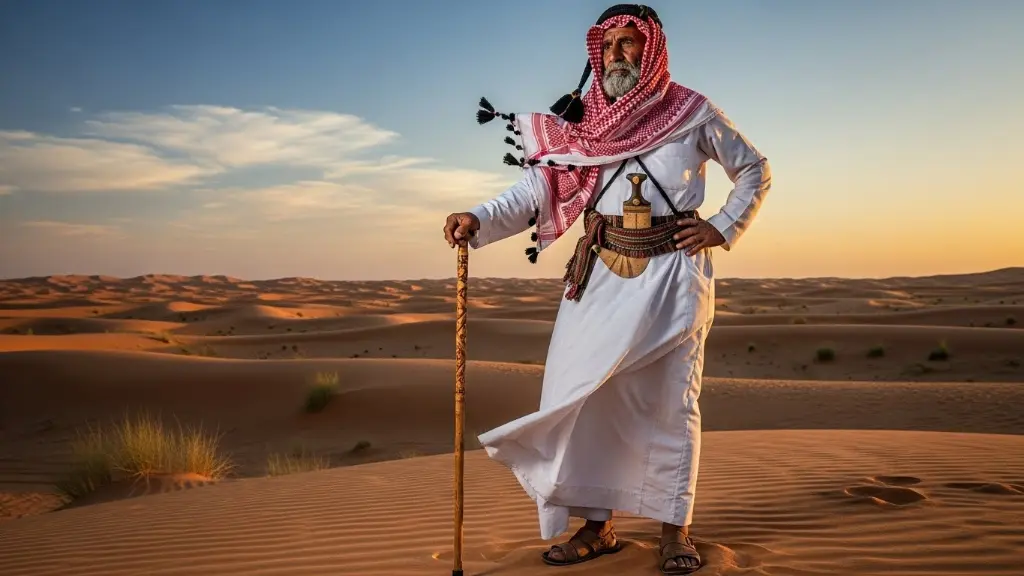
The Bedouin man’s clothing is, like all desert dwellers, designed for maximum protection and practicality.
- White Galabeya: A simple, clean white galabeya is the standard, reflecting the sun’s heat.
- The Keffiyeh (Shemagh): The head covering is the most crucial piece of gear. It is a large square of cloth, usually white or red-and-white checkered, known as a keffiyeh or shemagh. It is held in place by a black cord circlet called an agal. The keffiyeh is an incredibly versatile tool: it protects the head and neck from the sun, can be wrapped around the face to protect from sand and dust, can be used as a towel, a rope, or a bag. It is the ultimate desert survival tool.
Conclusion: A Living, Woven Heritage
From the earthy cottons of the Delta to the sober, proud robes of Upper Egypt and the dazzling embroidered masterpieces of the Sinai, the regional dress of Egypt is a vibrant and powerful testament to the country’s incredible cultural diversity. These garments are so much more than “costumes.” They are the living, breathing expressions of a people’s relationship with their land, their history, and their identity.
While the “Global Uniform” has made inroads in Egypt’s cities, as it has everywhere, a journey into the countryside reveals that this woven heritage is still alive. It is seen in the proud stride of a Sa’idi man in his flowing galabeya and in the intricate stitches of a Bedouin mother teaching her daughter the patterns of their tribe.
These threads connect the modern Egyptian to their ancestors and to the very soil of the Nile Valley. They are a beautiful reminder that in a world of growing homogeneity, true culture resides in the rich, colorful, and unique stories we choose to wear.
Which regional style of Egyptian dress do you find most beautiful or compelling? Share your thoughts and appreciation in the comments below! 👇
❓ Frequently Asked Questions about Egyptian Regional Dress
Q1: Do people still wear these clothes every day?
A: In many rural areas, yes. The galabeya is still the standard daily wear for millions of men and women in the Nile Delta and Upper Egypt because it is comfortable, practical, and culturally appropriate. The more elaborate and decorated versions are typically reserved for special occasions like weddings, religious holidays, and festivals. Bedouin dress is still worn daily in many traditional communities in the Sinai.
Q2: What is the difference between a galabeya, a djellaba, and a kaftan?
A: These are all long, loose robes but have regional differences. The galabeya is typically Egyptian and Sudanese, with a simpler cut. The djellaba is Moroccan, distinguished by its pointed hood (qob). The kaftan is a broader term, often referring to a more formal, open-fronted coat worn over a galabeya, particularly in Upper Egypt and other parts of the Middle East.
Q3: Is the embroidery on Bedouin dresses done by machine?
A: Absolutely not. The beauty and value of an authentic Bedouin dress lies in the fact that it is entirely hand-embroidered. The fine, dense cross-stitch is a highly skilled art form passed down from mother to daughter. A single chest panel can take months of patient work to complete.
Q4: Can a tourist wear a galabeya in Egypt?
A: Yes, and it’s often a very comfortable and practical choice, especially in the heat. Tourists, both male and female, often buy simple cotton galabeyas to wear. It is generally seen as a sign of respect and appreciation for the local culture, rather than as appropriation. However, it would be inappropriate to wear a highly specific or ceremonial garment, like a heavily decorated Bedouin bridal dress, out of context.